Why Panic Attacks Cause Chest Pain (And Why It Feels So Scary)
One of the most frightening symptoms people experience during a panic attack is chest pain.
When the pain appears suddenly, many people fear something is seriously wrong with their heart. The sensation can feel tight, sharp, or heavy, and it is often accompanied by a racing heartbeat, shortness of breath, dizziness, and a powerful sense of fear.
Because these symptoms resemble those associated with medical emergencies, it is very common for people experiencing panic attacks to believe they may be having a heart attack.
Understanding why chest pain occurs during panic attacks can help reduce some of the fear surrounding this experience.
key takeaways
• Chest pain is one of the most common and frightening symptoms of panic attacks.
• During panic, rapid breathing and muscle tension can create tightness or discomfort in the chest.
• These sensations often lead people to fear a serious heart problem.
• In most cases, panic-related chest pain is not dangerous and resolves once the nervous system settles.
• Understanding why chest pain happens during panic can reduce fear and help people respond more calmly.
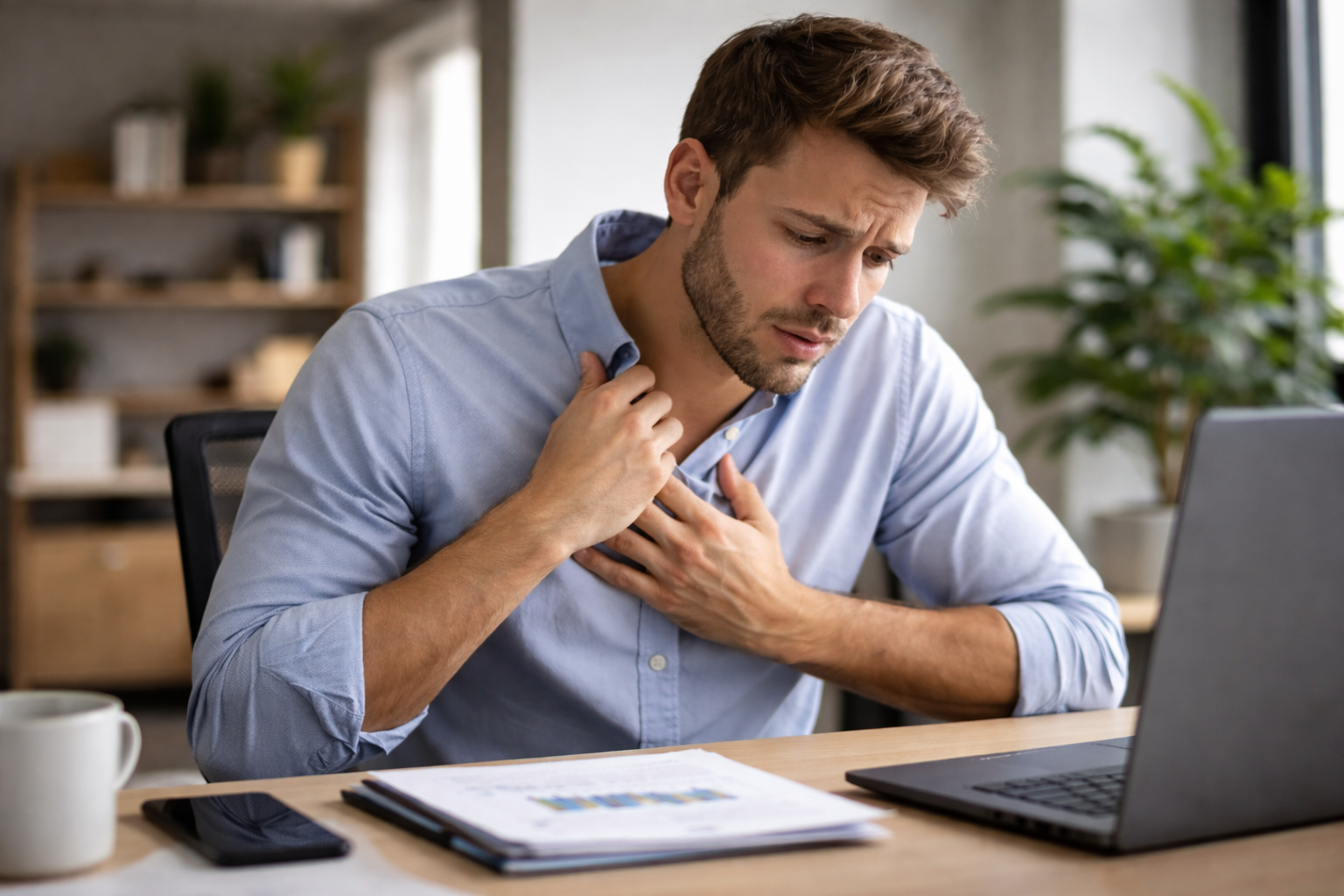
Chest tightness during a panic attack is caused by the body’s stress response and changes in breathing, which can make the sensation feel alarming.
in this article
• Why panic attacks cause chest pain
• What happens in the body
• Why the sensation feels so frightening
• Panic attack vs heart attack
• Why understanding symptoms reduces fear
The Body's Alarm System
Panic attacks occur when the body's fight-or-flight response activates suddenly.
This response is part of the nervous system's natural defense mechanism. When the brain detects danger, it releases stress hormones such as adrenaline, preparing the body to react quickly.
During this response:
• heart rate increases
• breathing becomes faster
• muscles tighten
• the body becomes highly alert
These reactions are designed to help us respond to threats. However, during a panic attack, the nervous system activates this response even though there is no real physical danger.
If you would like to understand what happens in the body during a panic attack, you may find this article helpful:
What Is a Panic Attack? Symptoms, Causes & What Happens in the Body
Muscle Tension and Chest Tightness
One of the main reasons panic attacks cause chest pain is muscle tension.
When the body enters a high-alert state, muscles throughout the body tighten, including the muscles in the chest wall.
This tension can create sensations such as:
• tightness in the chest
• pressure or heaviness
• sharp or stabbing pain
• soreness after the episode
Because these sensations occur close to the heart, they can easily be mistaken for heart-related problems.
Changes in Breathing
Another factor that contributes to chest pain during panic attacks is changes in breathing. When someone becomes anxious, breathing often becomes:
• rapid
• shallow
• irregular
This pattern can lead to hyperventilation, which alters oxygen and carbon dioxide levels in the blood. As a result, people may experience:
• chest discomfort
• dizziness
• tingling in the hands or face
• a feeling of not getting enough air
These sensations can intensify fear, which then reinforces the panic response.
Why the Sensation Feels So Alarming
The chest is a very sensitive area of the body, and sensations there are naturally interpreted as potentially serious. When chest pain occurs during a panic attack, the brain often jumps to catastrophic conclusions such as:
• “Something is wrong with my heart.”
• “I'm having a heart attack.”
• “I'm going to die.”
These thoughts increase fear and adrenaline, which can make the symptoms feel even stronger. This is one of the reasons panic attacks can become part of a repeating cycle.
If you would like to understand why panic attacks can start repeating, you may find it helpful to read:
Why Panic Attacks Keep Happening (And How to Stop the Cycle)
Panic Attack or Heart Attack?
Because the symptoms can feel so similar, many people understandably worry that they may be experiencing a heart attack. While panic attacks themselves are not dangerous, it is always appropriate to seek medical evaluation if symptoms are new, severe, or unclear.
Once medical conditions have been ruled out, understanding the difference between panic symptoms and heart-related symptoms can be very reassuring.
You can learn more about this in: Panic Attack or Heart Attack? How to Tell the Difference
Why Understanding the Symptom Matters
Chest pain is one of the symptoms that most strongly fuels fear during panic attacks. When people do not understand what is happening in their body, the sensations can feel overwhelming and unpredictable.
However, when individuals learn that these symptoms are connected to the nervous system's stress response, the experience often becomes less frightening.
Understanding the body's reactions is often the first step toward breaking the panic cycle.
Learning to Calm the Nervous System
Panic attacks are closely connected to how the nervous system processes stress and perceived threats. Approaches that work with both the conscious and subconscious mind can help people reduce the patterns that trigger panic responses.
Over time, it is possible to retrain the nervous system so that it no longer reacts as strongly to internal sensations or stressful situations.
Many people who once experienced frequent panic attacks are able to regain a sense of stability and confidence in their daily lives.
If panic attacks are affecting your life, you may want to explore a structured approach to recovery.
You can learn more about The Panic Cycle Recovery Program, which focuses on nervous system retraining and subconscious integration.
You can also apply for a consultation to explore whether this approach may be appropriate for you.