Panic Attack or Heart Attack? How to Tell the Difference
One of the most frightening experiences during a panic attack is the feeling that something may be seriously wrong with the body.
The heart may begin racing, the chest can feel tight or painful, breathing may become difficult, and dizziness can appear suddenly. For many people, these sensations feel so intense that they immediately worry they might be having a heart attack.
This concern is extremely common.
In fact, many individuals experiencing panic attacks visit emergency departments at least once because the physical symptoms feel so similar to a cardiac event.
Understanding the difference between a panic attack and a heart attack can help reduce fear and support better decision-making when symptoms appear.
Key Takeaways
• Panic attacks and heart attacks can share similar symptoms, including chest pain, shortness of breath, and dizziness.
• Panic-related chest pain is usually caused by muscle tension, rapid breathing, and nervous system activation.
• Heart attack symptoms often involve persistent pressure in the chest and may spread to the arm, jaw, or back.
• When symptoms are new or uncertain, seeking medical evaluation is always important.
• Understanding the differences can help reduce unnecessary fear during panic episodes.
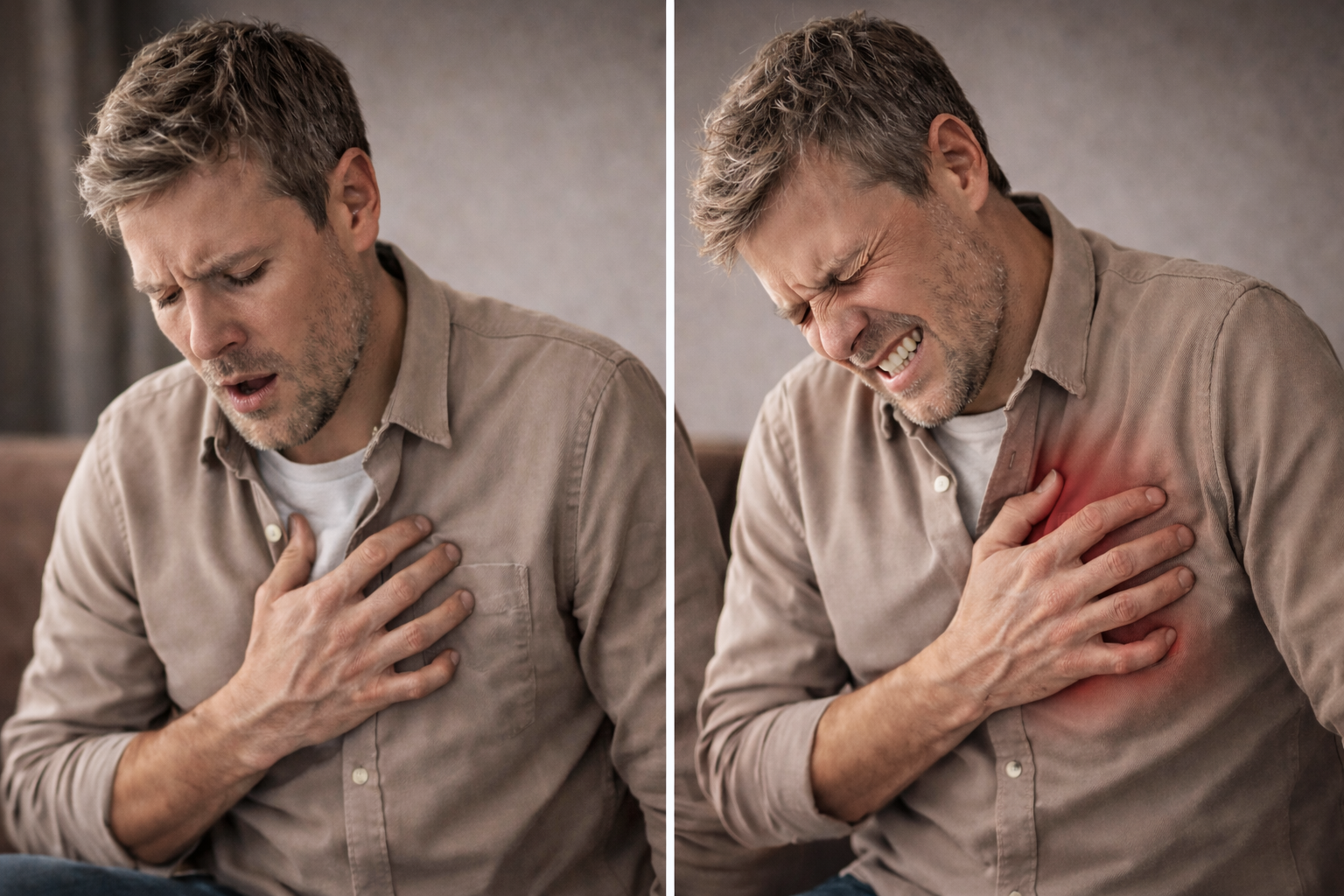
Panic attacks can produce intense physical sensations such as chest pain and shortness of breath, which is why many people initially fear they are having a heart attack.
In this article
• Why panic attacks can feel like heart attacks
• Symptoms that often overlap
• Key differences between panic and heart conditions
• When medical evaluation is important
• Why understanding the difference reduces fear
Why Panic Attacks Can Feel Like a Heart Attack
Panic attacks activate the body's fight-or-flight response, a survival mechanism controlled by the nervous system.
When this response is triggered, the body releases stress hormones such as adrenaline. These hormones prepare the body to respond quickly to perceived danger.
Several physical changes occur:
•heart rate increases
•breathing becomes faster
•muscles tighten
•blood pressure may rise
•the body becomes highly alert
These reactions are normal survival responses. However, when they occur suddenly and intensely, they can feel very alarming.
Because the heart and chest are strongly involved in this response, many people interpret the sensations as signs of a cardiac emergency.
To understand why panic can produce such intense physical symptoms, it may help to read more about what actually happens in the body during a panic attack.
Panic Attack vs Heart Attack: Key Differences
Although the symptoms can overlap, there are important differences between panic attacks and heart attacks.
Panic Attack
•Often begins suddenlyduring stress or anxiety
•Heart rate may feel fast or pounding
•Symptoms may peak within 10–20 minutes
•Fear and intense anxiety are usually present
•Breathing may feel rapid or shallow
•Symptoms gradually settle as the nervous system calms
Heart Attack
•Often develops with physical exertion or underlying heart disease
•Chest pain often feels like pressure or squeezing
•Symptoms often persist or worsen over time
•Anxiety may or may not be present
•Shortness of breath may accompany chest pain
•Symptoms often require medical intervention
When to Seek Medical Attention
If you are experiencing new, severe, or unusual chest pain, it is always safest to seek medical evaluation.
Medical professionals can determine whether symptoms are related to a heart condition or another cause.
You should seek immediate medical care if you experience:
•persistent chest pressure or squeezing
•pain spreading to the arm, jaw, or back
•severe shortness of breath
•fainting or loss of consciousness
•symptoms that do not improve
When in doubt, it is always appropriate to prioritize safety and consult medical professionals.
Why Understanding Panic Matters
Many people who experience panic attacks become frightened of the physical sensations themselves.
After one intense episode, the body may become highly alert to any change in heartbeat, breathing, or chest sensation. This heightened awareness can sometimes make future panic attacks more likely.
Understanding how the nervous system produces these sensations can reduce the fear surrounding them.
When the sensations are recognized as part of a stress response rather than a medical emergency, the panic cycle often begins to lose some of its intensity.
When Panic Attacks Become Recurrent
For some people, panic attacks occur only once during a particularly stressful time.
For others, they begin to happen more frequently. At that point, the fear of another attack may start influencing daily life.
People may begin avoiding situations where panic has occurred before, monitoring their body for signs of danger, or worrying about when the next episode might happen.
When panic becomes recurrent, working with a structured therapeutic approach can help address the underlying patterns in the nervous system that maintain the panic cycle.
If panic attacks have been happening repeatedly, you may also want to explore why panic attacks keep happening and how the panic cycle develops.
Explore the panic cycle recovery program
If you would like to learn more about how panic patterns can be addressed in a structured way, you can explore the Online Panic Attack Treatment Program, where each session focuses on helping interrupt the panic cycle and retrain the nervous system response.
If panic attacks have been affecting your daily life and you would like professional guidance, you are welcome to apply for a consultation.
During this conversation we can explore your experience, discuss how panic is affecting your life, and determine whether this therapeutic approach may be appropriate for you.