Why Panic Attacks Happen at Night (Nocturnal Panic Attacks)
Understanding Night Panic Attacks and Why They Wake You from Sleep
For many people living with anxiety or panic disorder, one of the most confusing experiences is waking suddenly in the middle of the night with intense physical symptoms.
You may fall asleep normally, only to wake up abruptly with:
• a racing or pounding heart
• shortness of breath
• chest tightness
• dizziness or nausea
• shaking or sweating
• a sudden wave of fear or dread
These episodes are known as nocturnal panic attacks, and although they can feel extremely frightening, they are a recognized and well-understood pattern within panic and anxiety disorders.
The experience can be especially distressing because it seems to come completely out of nowhere, interrupting sleep and creating fear about what may happen the next night.
Understanding why nocturnal panic attacks occur is an important step toward reducing their intensity and frequency.
key takeaways
• Nocturnal panic attacks occur suddenly during sleep and can wake a person with intense physical symptoms.
• People may experience a racing heart, shortness of breath, sweating, or a feeling of impending danger.
• These episodes are related to the same nervous system mechanisms involved in daytime panic attacks.
• Nighttime panic can feel particularly frightening because it happens unexpectedly during sleep.
• Understanding the body’s stress response can help reduce fear around these episodes
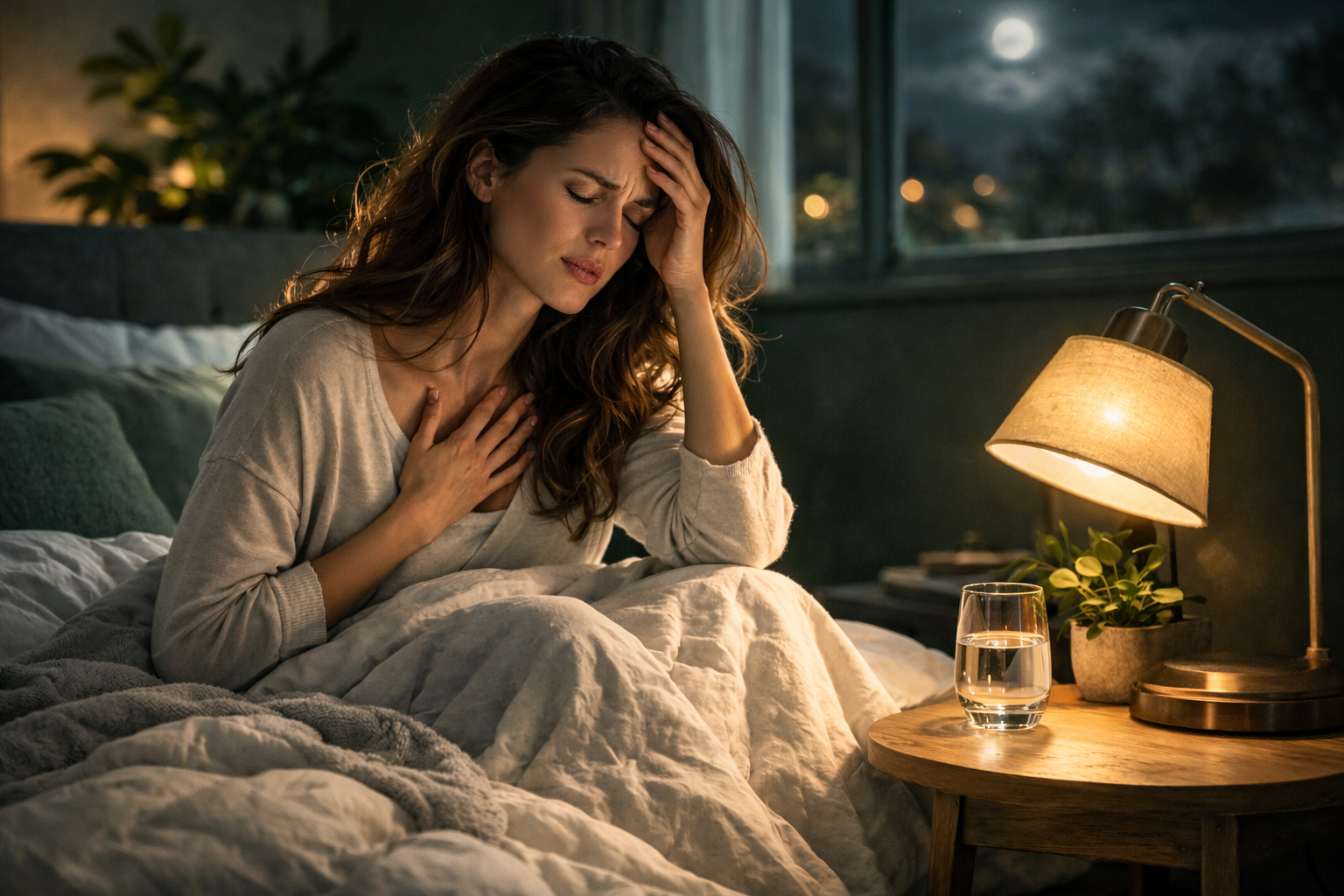
Nocturnal panic attacks can wake someone suddenly from sleep, often accompanied by intense physical sensations and a feeling of imminent danger.
in this article
• What nocturnal panic attacks are
• Why panic attacks can occur during sleep
• Common symptoms people experience at night
• Why night-time panic can feel especially frightening
• How the nervous system is involved
What Is a Nocturnal Panic Attack?
A nocturnal panic attack is a panic episode that awakens a person from sleep.
Unlike panic attacks that occur during the day—often triggered by stressful thoughts or situations—night panic attacks begin while the body is already asleep.
People often wake suddenly with strong physical symptoms and a sense that something is seriously wrong.
Because the mind has just transitioned from sleep to wakefulness, there may also be a brief period of disorientation or confusion, which can intensify the fear response.
However, the underlying mechanism of a nocturnal panic attack is the same as any other panic episode: the brain has activated the body's fight-or-flight response.
If you would like to understand what happens inside the body during a panic attack, you may find it helpful to read: What Is a Panic Attack? Symptoms, Causes & What Happens in the Body
Why Panic Attacks Can Happen During Sleep
Although nocturnal panic attacks may feel mysterious, they usually occur because the nervous system has become highly sensitive to internal bodily sensations.
During sleep, the body naturally goes through cycles that involve subtle changes in:
• breathing patterns
• heart rate
• muscle relaxation
• oxygen levels
• brain activity
These changes are normal and happen every night. However, in individuals whose nervous system has become sensitized by anxiety or repeated panic attacks, the brain may begin monitoring these sensations too closely.
If the brain misinterprets a harmless change—such as a shift in breathing or heart rhythm—as a potential threat, it can activate the body's alarm system.
This sudden activation of the sympathetic nervous system releases adrenaline and triggers the fight-or-flight response, which is what wakes the person up in a state of panic.
The Panic Cycle During the Night
Nocturnal panic attacks are also connected to what is known as the panic cycle.
This cycle occurs when physical sensations are interpreted as dangerous, which increases fear and intensifies the body's response.
For example:
•A normal physical sensation occurs during sleep
•The brain interprets it as a threat
•The nervous system activates the fight-or-flight response
•Adrenaline increases physical symptoms
•Fear intensifies
•The cycle reinforces itself
•Understanding this pattern is essential for breaking the cycle of recurring panic.
•You can explore this process in more detail here:
•Why Panic Attacks Keep Happening (And How to Stop the Cycle)
•Why Night Panic Attacks Feel Especially Frightening
Many people report that panic attacks at night feel more intense than daytime panic attacks.
There are several reasons for this.
First, when you wake suddenly from sleep, the brain may still be partially in a dream state. This brief period of confusion can make the experience feel more alarming.
Second, night-time is typically quiet and dark, which can amplify feelings of vulnerability or isolation.
Finally, because the panic did not seem to be triggered by any obvious event, it may feel as though the body has suddenly become unpredictable.
Despite these factors, nocturnal panic attacks still follow the same physiological process as any other panic episode.
What To Do When You Wake with a Panic Attack
Although nocturnal panic attacks can feel overwhelming, there are practical ways to help the nervous system calm down.
Many people find it helpful to:
• focus on slow, controlled breathing
• sit up and allow the body to re-orient
• gently remind themselves that the symptoms are temporary
• bring attention to the surrounding environment to regain a sense of safety
These steps help signal to the brain that the perceived threat is no longer present.
Over time, learning to respond calmly to panic sensations can reduce the likelihood that the panic cycle will escalate.
If you would like to learn additional strategies, you may also find these other articles helpful:
One of the most frightening aspects of nocturnal panic attacks is the fear that the symptoms may indicate a serious medical problem.
Because panic attacks often involve chest pain, shortness of breath, and a racing heart, many people worry that they may be experiencing a heart attack.
Understanding the differences between these experiences can be very reassuring.
Yes. Nocturnal panic attacks often improve significantly when the underlying panic pattern is addressed.
Therapeutic approaches that focus on regulating the nervous system can help the brain stop misinterpreting normal body sensations as threats.
As the nervous system becomes calmer and more resilient, panic episodes—both daytime and night-time—often become less frequent and less intense.
Many people discover that once they understand how their nervous system works, the experience of panic becomes far less frightening.
When To Seek Professional Support
If panic attacks are waking you at night or affecting your daily life, seeking professional support can be an important step toward recovery.
Working with a qualified therapist can help you:
• understand the underlying patterns that trigger panic
• retrain the nervous system's response to physical sensations
• restore a sense of safety and confidence in your body
Regaining a Sense of Calm
Waking with a panic attack can feel deeply unsettling. However, these episodes are not a sign that something is wrong with your body. They are a sign that the nervous system has become over-protective, reacting strongly to sensations that are actually harmless.
With the right guidance and techniques, it is possible to retrain this response and restore a calmer, more balanced nervous system.
If panic attacks—whether during the day or at night—are affecting your wellbeing, professional support may help you break the cycle.
Explore the panic cycle recovery program
If you would like to understand how this work is approached in a structured way, you can explore the Online Panic Attack Treatment Program, where each session is designed to help interrupt the panic cycle and retrain the nervous system response.
Apply for a Consultation
If panic attacks—whether during the day or at night—are affecting your wellbeing, professional support may help you break the cycle.
You can apply for a consultation to explore how clinical hypnotherapy and nervous-system focused approaches may help you regain control and experience lasting relief